


At Accor, guest experience: Decline or "Enshittification"?
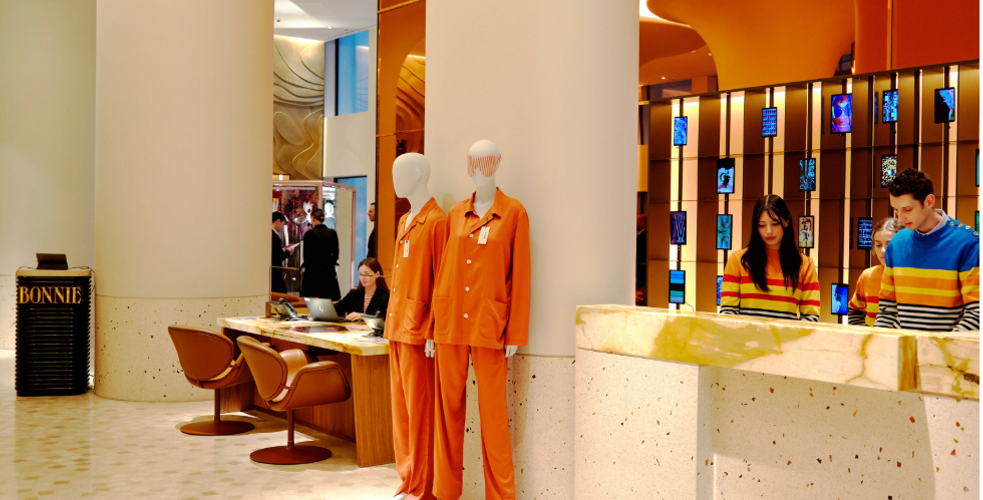
After the hedge fund Parvus Asset Management demanded the departure of Sébastien Bazin and his team, France Culture, the French public radio network, is putting Accor under pressure with a well-documented podcast by Frédéric Martel on the decline of the customer experience in the group's hotels and booking process. At the Pullman Paris Tour Eiffel, a very large client recently terminated its contract, according to our exclusive reporting.

In Enshittification: Why Everything Suddenly Got Worse and What to Do About It, a much-discussed essay that was not written with AI, Cory Doctorow described, in very blunt terms and even coining a word for it, a global phenomenon seen on online platforms: the enshittification of the customer experience. On Monday, Frédéric Martel, a journalist at Radio France, released a podcast on the same subject at Accor, which he described in more polished terms: a decline in the customer experience.
He has drawn criticism from customers and senior executives of the hotel group, but also support from guests of Ibis, MGallery and Mercure hotels, who say they feel the same frustration.
The podcast comes at an awkward moment for Accor's chairman and CEO, Sébastien Bazin, whom the fund Parvus describes as ineffective at boosting the stock price. Parvus is even calling for his departure.
The podcast's opening words: the customer is no longer king in the group's hotels, but a commodity
"You have to be absolutely modern." That has been the strategy of Sébastien Bazin for thirteen years at the head of Accor, a French company listed on the CAC 40 and a hospitality giant with more than 5,800 hotels and 420,000 employees in 120 countries.
The Accor name may not be familiar to you, but you know its hotels: Ibis, Novotel, Mercure and Sofitel all belong to the group, as do Fairmont, Raffles and Swissôtel.
And now, a twist this weekend: the group's largest shareholder, a British hedge fund domiciled in the tax haven of Jersey, demanded the departure of the French CEO Sébastien Bazin. The news was first reported by the Financial Times and picked up by Les Échos (a leading French business daily) and Le Monde (France's newspaper of record). One important point: although Accor is a French company, only 3% of it is held by French shareholders. The majority are British, Saudi, Qatari or American.
The podcast covers, among other things, the complexity of the booking process, the decline in service across the group's brands, a very partial consideration of travelers' needs, and a token effort to listen to the voice of the customer, according to its author. His assessment is based, he says, on more than 300 stays at Accor hotels. "The customer has become a commodity, and is far from being king." He also highlights Sébastien Bazin's successes in transforming the group, such as the ALL (Accor Live Limitless) platform, which "disintermediates the intermediaries," meaning it cuts out online travel agencies like Expedia and Booking.com.
Our Take
The debate launched by the producer of Soft Power on France Culture is timely. Every group in travel and hospitality knows that the quality of the customer and traveler experience is the key to repeat business (loyalty) and brand profitability. At what point can one reasonably speak of a decline, or of the "enshittification," of the customer experience, as opposed to delight (the holy grail pursued by CX specialists)? That is a very tricky distinction and one that depends on personal perception. Still, the subject can't be brushed aside.
It is a highly technical subject, because behind the term "customer experience" lie digital experience projects and employee experience projects, and because new, higher standards have taken hold, driven by Amazon, Booking, Airbnb and even French-speaking players in hospitality. But it is not impossible to get right: we recently had memorable stays at the Hôtel du Couvent in Nice and at L'Arlatan in Arles, in Provence. Both are, admittedly, owner-operated by entrepreneurs.
At Accor's headquarters, a large team has been working on these issues for a long time, supported by many consultants. Yet the group has not shone for its innovations or for the speed with which it has rolled out technologies that truly revolutionize the customer experience, such as voice AI agents, customer experience measurement and loyalty (its loyalty program is very weak and complicated).
At the Pullman Paris Tour Eiffel, a contract terminated over the "amateurism" of the management team
Accor has real assets, even though it has shed ownership of the real estate behind its hotels.
The group has, for example, one of the best in-house call centers in the world for travel, in Moncton and often wonderful locations, such as the MGallery La Reine Margot in Issy-les-Moulineaux, a Paris suburb. In Paris, it also has an in-house team of young managers in charge of the customer experience, motivated and eager to launch projects. We have had the opportunity to interview Saqr Fassi Fehri (SVP Guest Experience) on the subject, and to hear Maud Bailly speak.
But that is no longer enough when more agile competitors keep improving and offer more for the same price, and when many pain points (friction points) persist. Data onboarding is a good example: customers are asked for the same information several times, a real chore that Frédéric Martel mentions.
Proximity and a view of the Eiffel Tower are no longer enough
Recently, at the Pullman Paris Tour Eiffel, one of the world's largest cruise lines terminated its contract, after having long and unsuccessfully warned the management of this large Paris hotel, which Accor operates. After multiple complaints from American customers, Dutch executives from the company in question came to see for themselves and inspect rooms. The Pullman's management wanted to show them a room that had been prepared in advance. The executive refused it, walked into the adjoining room and found the run-down condition, the noise from construction work and the other issues his customers had raised.
The contract was terminated after that visit. "They're amateurs," the executive in question reportedly said, and he moved his passengers to the Hôtel du Collectionneur near Parc Monceau in Paris.
Manuel Jacquinet
Cover picture, SO/ Paris Hotel - ALL © Edouard Jacquinet