






My accountant and my debt-collection team are in Marrakesh

Equipped with highly specialized software and well-versed, for example, in sending RCS messages, former telemarketers and 118 218 agents have saved their profession and are now taking part in the Movida shaking Morocco. In Niger, Bombino beams rock music into orbit, with help from Dan Auerbach.

“In 2005, I was answering thousands of calls for 118 218. Today, I do phone-based debt collection. And soon, we’ll be testing conversational agents.”
Without ever leaving the city where she was born, Loubna Lazizi has moved up the customer-relations ladder, like thousands of young Africans. She agreed to change jobs and employers; her talent and commitment did the rest.
“Very well, madam, I note that you will be paying your electricity bill in four installments. I’ll take the first payment over the phone. Please give me your bank card number and I’ll keep you on the line to make sure the transaction goes through.”
It is 6:30 p.m. The small debt-collection team at OceanCall has just made two people happy: Catherine Achouch, Director of Operations at Vattenfall, a major energy player, and her customer, for whom this payment plan provides some breathing room without fearing a power cut.
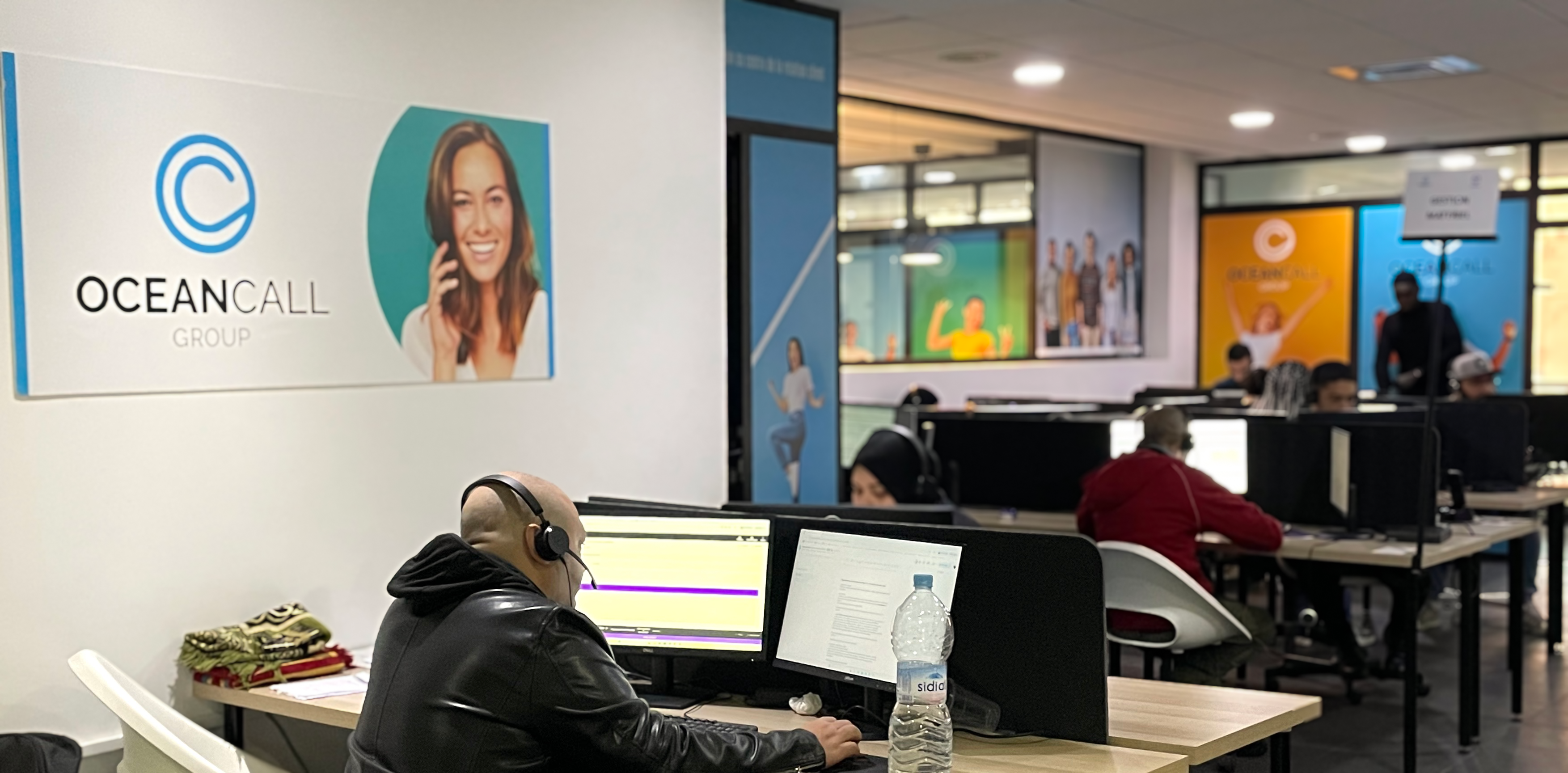
The former SFR and ENI executive has just completed a dual call-monitoring session. From her satisfied expression, one can tell she is delighted with the new processes she has just tested, combining RCS messaging and voice calls, with authenticated voice payment (via Voxpay). These tools enabled her to recover several hundred thousand euros in unpaid bills in less than four weeks.
A few months ago, after years of working with Concentrix, she began a commercial relationship with OceanCall. The arrival at this dynamic BPO player of former Webhelp executives (Franck Etienne and Jeremy Schaffner) allowed Benoit Foillard’s company to create a highly effective business unit specializing in cash recovery.

Majorel, TP, Concentrix, John Paul, Market Wave…
The entire BPO sector—and professions requiring customer service centers such as concierge services—is present in a city once known solely for tourism. From the brand-new train station, one can reach on foot in less than ten minutes Teleperformance’s center, the former Majorel site now occupied by OceanCall, as well as Market Wave and John Paul.
The years of explosive growth in the BPO sector are over, but new professions driven by the digitalization of countless industries have created fresh opportunities.
On the fourth floor of the same building, we meet a former French tax lawyer who made the leap fifteen years ago.
“About ten years ago, I gave everything up in France because I felt I was leaving behind so many things I was passionate about.”
The former lawyer, who began his career as an auditor at Deloitte, multiplied professional projects and recorded—in a book and short stories—the incredible experiences his work as a tax specialist had allowed him to live. He now runs a co-working center and an outsourcing company for payroll and accounting with an evocative name: izioutsourcing.
“Accountants can no longer recruit in France, and the more clear-sighted among them understand that AI is transforming the profession.
Here, we have well-trained resources who work 44 hours a week and have three weeks of vacation per year.”
Izioutsourcing found its first clients through word of mouth, but for some time now, its CEO Alexandre Krasnopolski has been receiving more inquiries from prospects he doesn’t know than from those he does. AI and the difficulty of recruiting trained staff in France—or the overall cost of such resources—form an explosive cocktail. Morocco is reaping the rewards of long-standing investments in youth education, notes the fifty-something executive.
Michel Ruiz, a former military man turned entrepreneur, agrees:
“To develop our conversational agents and augmented-reality services, we rely on coders and engineers trained 70 km from Marrakesh, at the famous UM6P in Benguerir. They’re killers.”
For both entrepreneurs, the conclusion is the same: many French companies have become extremely slow, reluctant to invest, and heavily paralyzed by layers of processes whenever a decision must be made. They will decline—slowly.
Everything you need to know to speak and converse with the French
“Fifteen years ago, to respond properly to our first calls, we had to undergo a month of training and digest an entire book on French culture, prefectures, and major brands. I kept that book and fond memories of certain calls.
Sometimes people would call 118 218 to find a swingers’ club in a given city and ask to be connected. I learned so many things!
What has changed today is that 118 218 barely exists anymore, that we now do many other things—far more complex remote services. And that we’re no longer required to take on a pseudonym.
Back when there were suicides in Orange’s call centers, it probably wasn’t desirable for operators to reveal that call centers were being set up in Morocco.”


Marrakesh Express
In 1969, Crosby, Stills and Nash released the song Marrakesh Express. Over an enchanting melody, it told how a train journey from Casablanca to Marrakesh allowed the musicians to discover another face of Morocco. The trio abandoned first class to meet passengers in second class. Colors, smells—everything amazed them.
Youssou N’Dour and his accomplice Peter Gabriel placed Senegal on the global music stage. Angélique Kidjo did the same for Benin. In 2013, rock fans discovered a guitar virtuoso. Produced by Dan Auerbach (The Black Keys), Bombino emerged and introduced Tuareg rock*, in the way truly gifted artists do: discreetly, with riffs from another planet.
Enjoy yourself, be truly rock, discover Africa—that’s where things are happening.
* Azamane Tiliade, our recommendation for discovering Bombino.
Manuel Jacquinet