






Angélique Kidjo Records at Studio Johanna. From Benin to Bagnolet, 1981
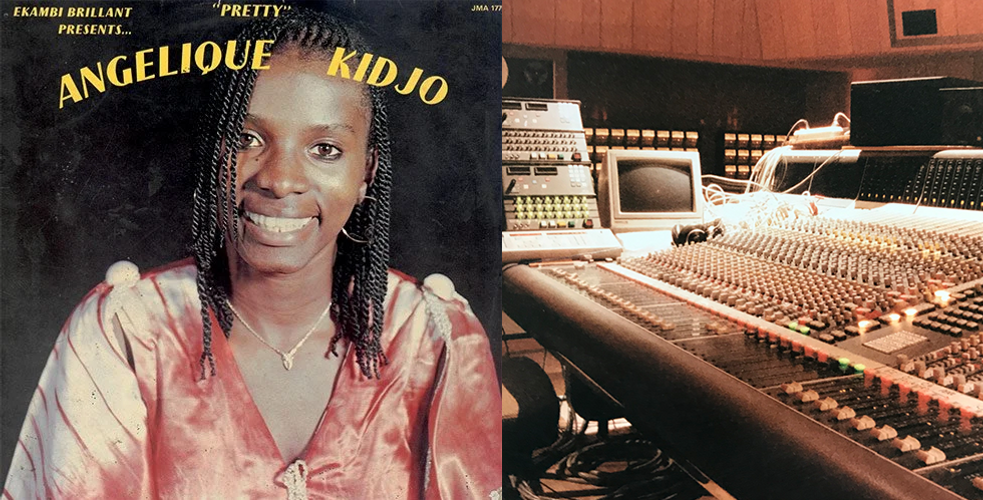
In the 1980s, many artists of African origin made their way to the Paris suburbs to record their first albums. They couldn't afford the rates at Ferber, Pathé-Marconi, Studio de la Grande-Armée, or Mega — all legendary studios. Angélique Kidjo still remembers Studio Johanna in Bagnolet. Pierre Braner remembers Studio Harry Son in Pantin.
Out in the suburbs, you could park your car, record through the night, pay rates that actually made sense, and meet musicians from every corner of the world. World Music owes much of its rise to these unlikely encounters between Caribbean musicians, conservatory-trained players, and artists from across Africa — all crossing paths by chance in the same suburban studios.
In 1981, Angélique Kidjo — not yet a star — records Pretty at Studio Johanna
During the week of April 30th, the "Queen of African Music" sat down for an interview with Paris Match, conducted by Benjamin Locoge. Here is a brief excerpt in which she looks back on her first recording sessions:
"My first album, 'Pretty,' came out in Benin in 1981. To record it, I made a round trip to Paris in two days. I arrived at 8 in the morning, laid down all the vocals by myself until 2 a.m., and caught the next flight back. The communist government had granted me a special exit permit. But that's where my hatred of recording studios comes from. Singing in front of machines — honestly… The thing is, I'd started having some success back home, then in Togo, where my father produced a concert. So my voice was starting to get heard. That wasn't necessarily welcome. The government required artists to write songs promoting its ideology. Very quickly, I understood I wasn't capable of that. My parents asked me to wait a year so they could save enough money for me to leave for France. You didn't need a visa back then to come… I used a cousin's wedding as cover to make my escape, on September 11, 1983."
The Beninese singer doesn't mention it, but it's at Studio Johanna that she records on that day.
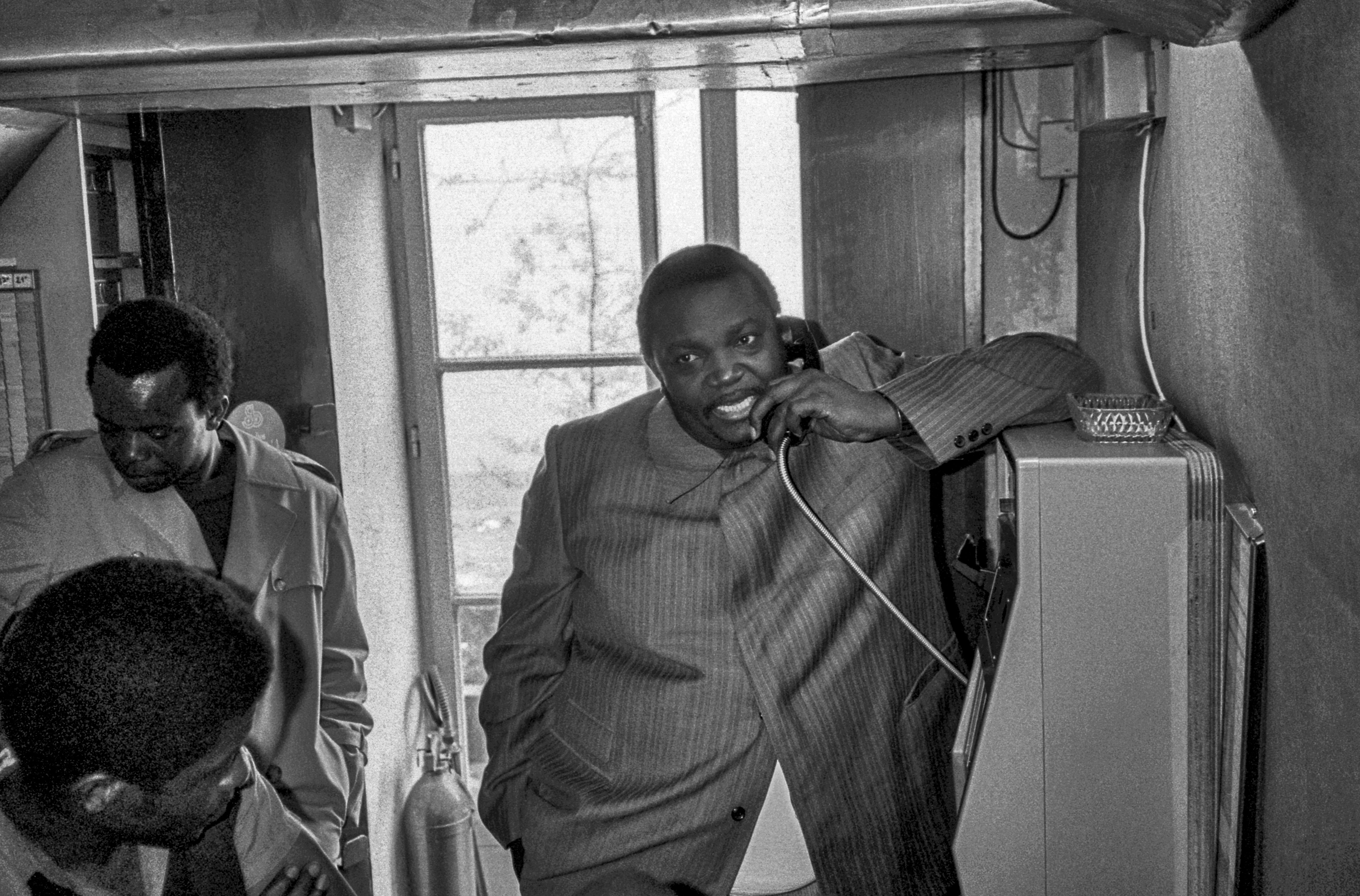
Jacob Devarieux (Kassav') and Gabriel Nahas at Studio Johanna
"I was crazy about Caribbean and African music — so much more festive than French pop," recalls Gabriel Nahas. He's probably the only one who still remembers the exact address of Johanna, even though he eventually moved on to other mixing boards. In Bagnolet in the early 1980s, he and Jacob Devarieux (Kassav') committed some of the most celebrated Caribbean and African records of the era to tape. And later, at Marcadet.
Calling in from Cannes, where he still works today, Gabriel dug through his box of memories — and got a little worked up: someone stole his Prince poster, signed by the Kid himself.
"Studio Johanna was in Bagnolet, at 64 Rue Sadi Carnot. The studio was founded by three key figures — actually four. The company was called KJDD. K for Benoît Kaufman; J for Jérôme, whose last name I can't remember; and one of the D's for Jean-Claude Dubois, who later built the Studio de la Grande Armée. They were partners. When I arrived, around mid-'79, Benoît Kaufman and Michel Cron were running the place. Benoît is a great arranger — in the same league as Jean-Claude Petit. And Michel Cron was first violin at the Paris Opera. I can't remember who the second D stood for. When I walked in, I was 17 or 18. I basically nudged my way in until they took me on. I was an assistant for a year, and they built a second control room. In the meantime, I went to the States. When I got back, that room was ready, so I elbowed my way into the staff engineer spot. At the start, I learned everything by recording music on an assembly line. That went on for a few months, and I became close with Jacob Devarieux, who had come in to record once in Studio A. Jacob came back to do the first Kassav' records with me, and that brought me the whole African community. Jacob was already doing arrangements for them, and suddenly I found myself recording every Cameroonian artist of the era — so much so that they invited me to spend a year in Cameroon to record an album, thanks to Manu Dibango: Les Fleurs musicales du Cameroun. I was the only one who knew the entire Cameroonian musical repertoire."
"How exactly did you meet Jacob Devarieux?
Well, it was his very first session at Johanna, in Studio A. The other engineers at the time weren't that into African and Caribbean music, but I was completely obsessed with it. Jacob really wanted to learn recording techniques, so he came to the studio constantly to assist. He wanted to understand how a studio worked. I suggested he assist me as often as possible, filling in on sessions whenever I needed a break — and that's how we managed everything. I think it helped him push Caribbean music forward. Jacob absorbed African music through me, and from that, he figured out how to blend Caribbean rhythms with African 6/8 grooves."
"Johanna's a strange name for a studio, isn't it?
It was the name of Benoît Kaufman's daughter. He was a musician with Les Chaussettes Noires. He and Dubois were friends, so they went into business together and built that studio. I stayed for two or three years after '79, then went freelance and started working at Marcadet."
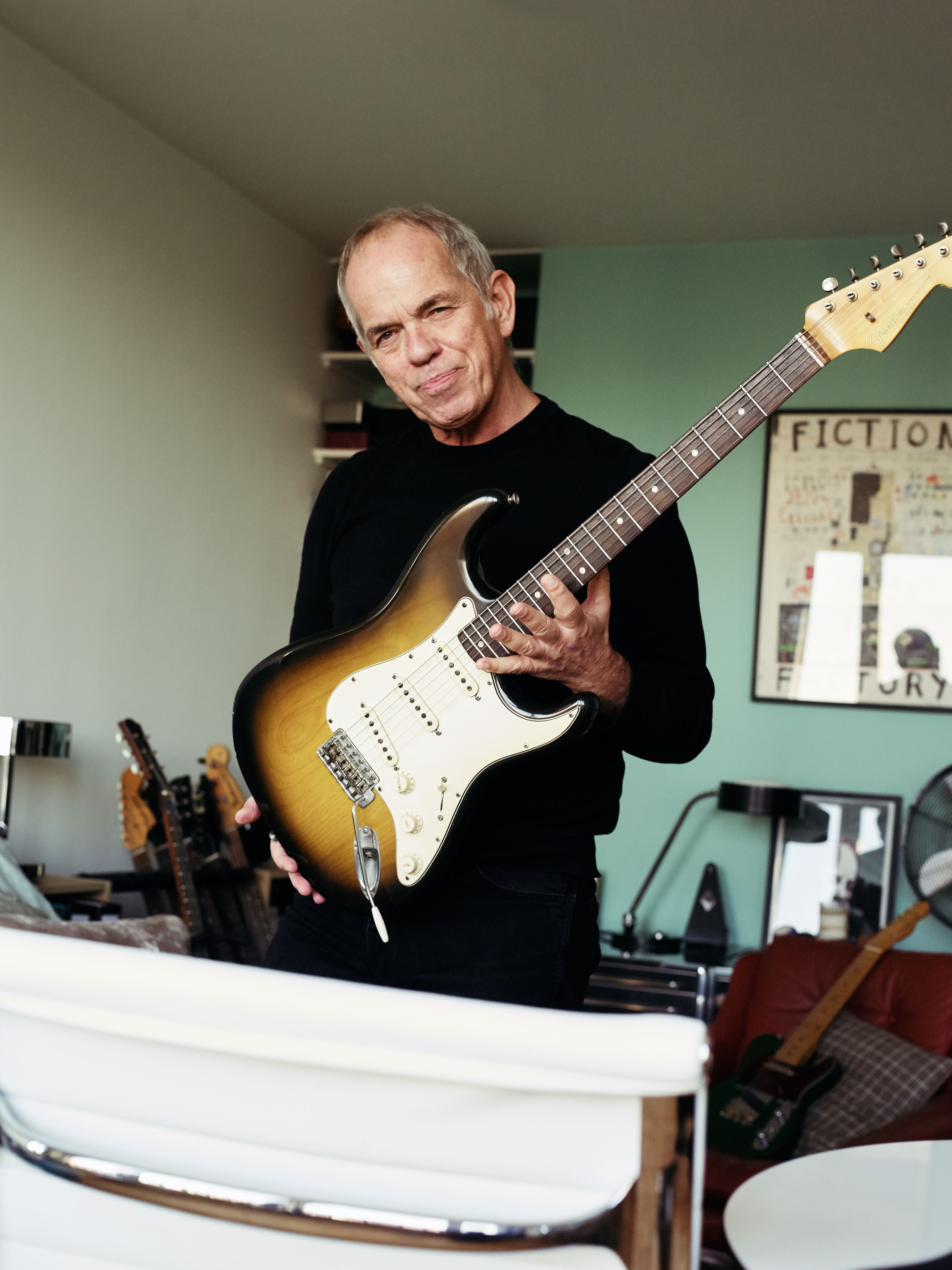
"Le Soleil Donne — was that recorded at Marcadet?
I started on Rue Marcadet, but pretty quickly we moved to La Plaine Saint-Denis, where Georges had set up shop. At the time, Marcadet had an API console and I was working on that. Then they decided to switch to an SSL. So I got lucky enough to be one of the few French sound engineers who'd ever put their hands on an SSL and actually knew how to run it. Right place, right time. Riding the momentum I'd built with the African and Caribbean artists, I shifted a bit more toward French rock — working with Bashung's team, and so on. I was splitting my time between the Caribbean artists and the French rock crowd. I met Steve Forward and introduced him at Marcadet. I could tell the guy had real talent and I told Blumenfeld: 'Look at this guy — what he does is insane.' He had musical and rhythmic abilities that were completely out of the ordinary. So I passed a few clients his way, including Diane Tell. Then one day Laurent Voulzy came to Marcadet — I wasn't available, so I pointed him toward Steve Forward, who went on to work with Voulzy and produce the hit 'Le Soleil Donne.' And I'll be honest: I never could have done what he did with that track."
"When did the shift to digital begin — and what kind of upheaval did it cause?
In the first half of the '90s. Although digital was already in the picture by 1985. We had 32-track digital machines, 3Ms, the first SSLs — that changed everything — and then the Ataris, the home studios, and it all started trimming things down from there."
"Kowalski stole your poster — tell us about that.
The English team calls me on a Saturday night: 'Prince is coming to Paris, he's staying a week, he wants a studio set up a certain way' — they give me the full setup specs and say: 'We need this ready by Monday morning.' I call Guillaume Tell: 'Prince is coming to Paris, can you rent me the studio for a week?' — 'No, I can only do three days.'"
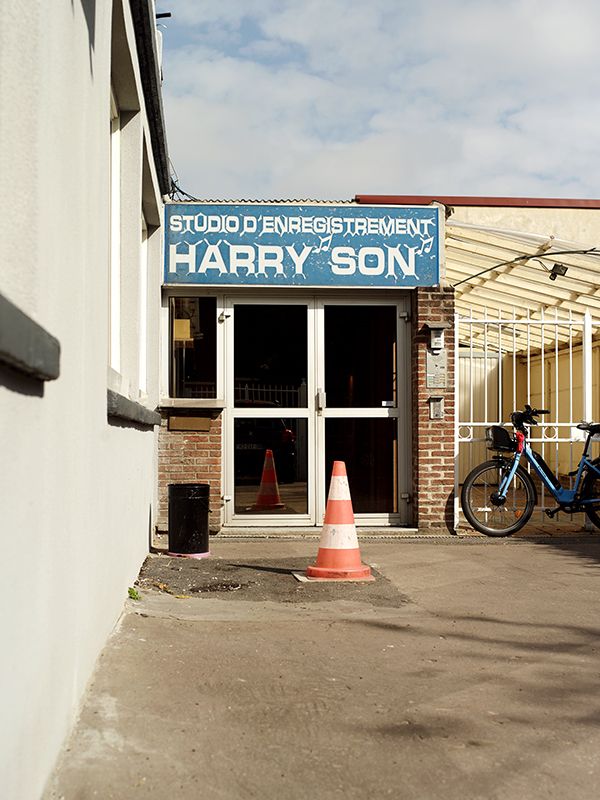
Studio Harry Son, Pantin
"In Paris, if you play accordion and sell records, you're a hick"
Pierre Braner: "In the industry, people used to say: 'Harry Son? That's a crappy studio for accordion players.' But that's just a particularly dumb kind of Parisian snobbery. Let me tell you something I observed throughout my career. In Paris — and only in Paris — if you play accordion and sell records, you're a hick. But a hundred kilometers outside the city, the moment you mention it, the person you're talking to pulls out a bottle of wine and their eyes light up. Suddenly you're the most interesting person in the room — their new best friend. They're far more impressed that you recorded André Verchuren, Yvette Horner, and Louis Corchia than that you worked with Johnny and the rest.
What I tried to do, from a marketing standpoint, was position Harry Son as something like the 'second-division studio' for record labels. A bit of history: in the '80s and '90s, our biggest clients — the ones who kept studios alive — were the record labels. They had dozens of artists on their rosters, including the blockbusters. Sardou, for instance, never sold less than a million copies per album. But behind him were dozens of lesser-known artists who still sold reasonably well. So the labels were careful to invest in the most talented, promising acts they'd discovered and were developing. Like in soccer, they had a second team — young players on the rise — and for those artists, having access to a well-equipped studio at slightly lower rates than Davout, the Grande Armée studios, Méga or Guillaume Tell was ideal. And that didn't stop us from recording Les Forbans, who outsold Jean-Jacques Goldman on the charts. Beating Goldman in the '90s — that didn't happen to many people."
This is what Pierre Braner shared during his interview for the book Studios de Légende — Secrets et histoires de nos Abbey Road français. Pierre Braner, staff engineer at Studio Harry Son, once left his native Belgium to join Studio 92. He eventually built Studio Harry Son alongside Harry Williams, son of André Verchuren, where he spent twenty-seven years recording the Gypsy Kings, Johnny Hallyday, Yves Duteil, Les Forbans, Michel Delpech, Francis Lalanne, Serge Reggiani, Annie Cordy, and many others.
They have since left us
Since these interviews were conducted for the book mentioned above, a number of the people featured have passed away — among them Jacob Devarieux and Bill Akwa Bétotè. Our deepest thanks to them for the insights, photographs, and irreplaceable testimonies they shared with us.

Studios de légende, secrets et histoires de nos Abbey Road français
A beautifully produced collector's book with exclusive photographs. 352 pages. Weight: 1.3 kg.
Published by Malpaso–Radio Caroline Média.
45 euros
Cover photo: Angélique Kidjo Preety album cover ; Studio Harry Son, Pantin.