



Gibert Jeune may close for good. Olivier Nora fired at Grasset. Turmoil on Paris' left bank!
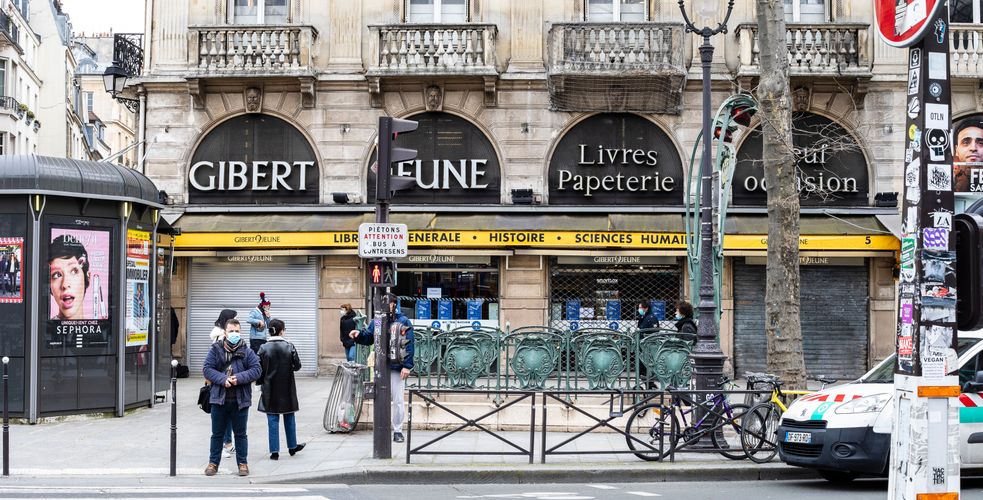
"Oh my Zelda, Montparnasse is gone"? The slow death of bookstores. Thousands of stores and factories close in city centers every year, mostly in silence. But when a beloved bookstore struggles, or a publishing house changes its CEO, the noise is deafening. Twenty-seven years after Alain Souchon's song about the Left Bank, what has really changed in the Latin Quarter?
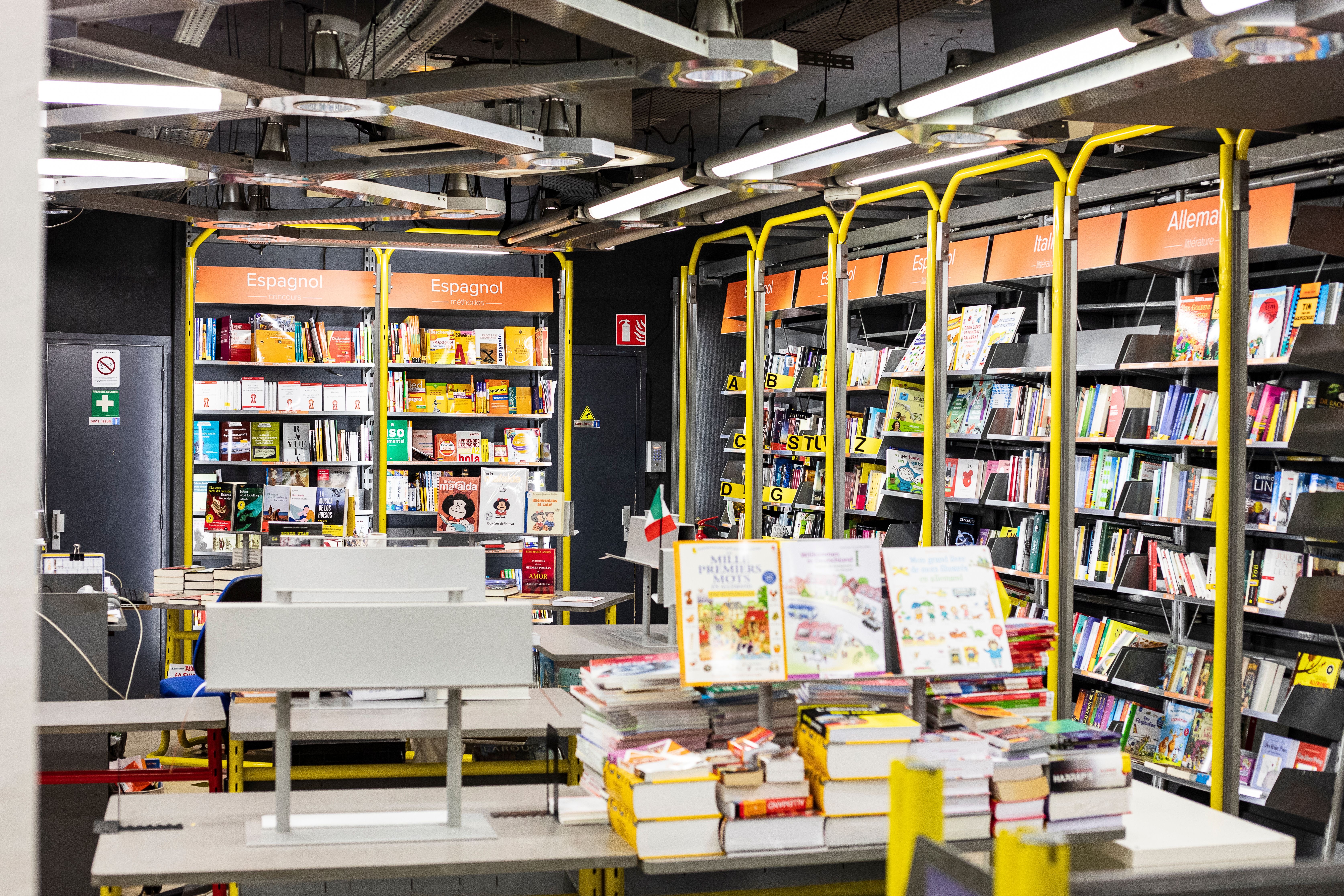
Left Bank: Gibert Jeune
On Monday, April 27th, it was announced that the well known Gibert Jeune bookstores would be filing for creditor protection to avoid potential bankruptcy proceedings. Back in 2020, news of the troubles facing these iconic Left Bank shops had already sent shockwaves around the world, following an article in Le Figaro.
Four of the six Gibert Jeune locations in the 5th and 6th arrondissements are set to close.
Founded in 1888, Gibert Jeune is disappearing — and France is grieving, along with much of the world. Former students who spent part of their youth or their college years browsing its shelves have responded from every corner of the globe. In 1888, a former literature teacher opened the first store on Quai Saint-Michel, specializing in secondhand academic books. After his death in 1915, his two sons took over. Then in 1929, Joseph Gibert opened his own bookstore nearby, while the original location — run by Régis — continued under the Gibert Jeune name. Both businesses thrived for decades, bolstered by additional locations across France.
Gibert Jeune, effectively bankrupt, was subsequently acquired by Gibert Joseph — but business never really picked up in the Latin Quarter. Competitor Boulinier has also closed. An article by Éric Anceau published in Le Figaro and shared on Twitter accumulated over 1.5 million views. The City of Paris announced it would move to acquire the Gibert location on Quai Saint-Michel.
A few selected reader comments following the article on Figaro.fr:
"I always preferred GJ over the sterile FNAC. Very sad — though of course the Latin Quarter is now full of Amazon loyalists protesting the lockdown of the very bookstores they never set foot in. RIP."
"GJ has been struggling for years. You can blame Amazon or whoever, but what about the management and the failure to adapt?"
"Zero investment in the stores, the displays, the staff training — for 50 years. What did you expect? And all of this in a sector where prices are regulated, meaning largely protected and artificially high."
"Kids today only have TWO hands — one for their phone, one for scratching themselves. No room for a book."
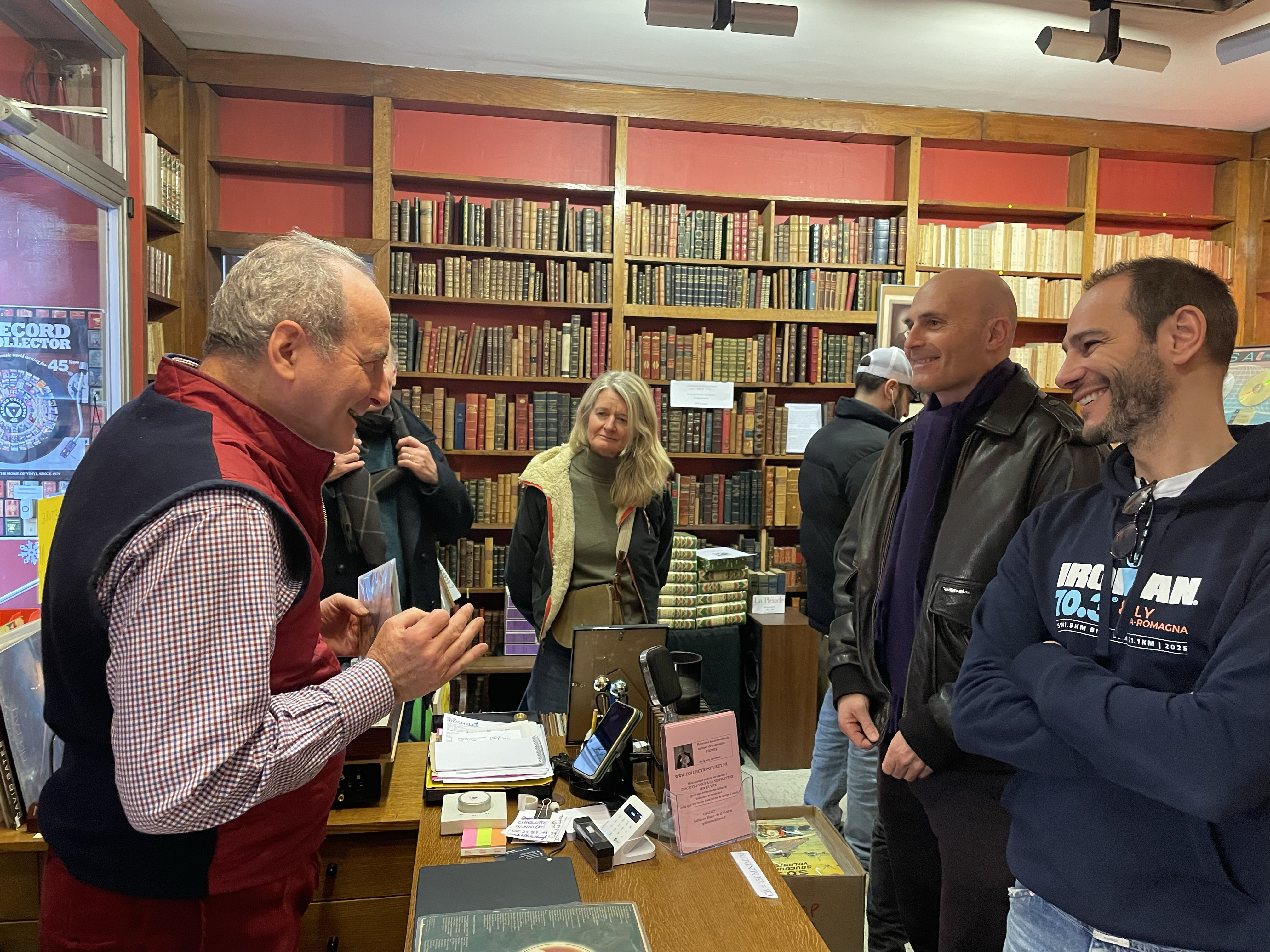
Right Bank: Le Tour du Monde closed its doors, January 17th
One of the most legendary bookstores in Paris, located at 9 Rue de la Pompe, permanently closed its doors on Saturday, January 17th. Jean-Étienne Huret, its owner and driving force — well known among bibliophiles — passed away over a year ago, and his heirs sold the property. Le Tour du Monde had already sold its brand name to Alapage. On the final day, rare books, illustrated covers, and specialty items were sold at steep discounts.
Visitors could walk away with illustrated Émile Zola novels, Paul Bonnet editions, for as little as €20 instead of €130. Rare early works on forensic medicine were also available, as were vintage advertising posters for Nicolas wine shops and the SNCF.
Jean-Étienne Huret founded the bookstore at 9 Rue de la Pompe in 1973. Le Tour du Monde was its name and brand before the sale to Alapage. A medical practice will be moving in after renovations.
Left Bank: L'Écume des Pages
May 17, 2023. A group calling themselves "the traumatized survivors of La Hune" gathered at the Café de Flore with a mission: to prevent the takeover of L'Écume des Pages, another legendary Latin Quarter bookstore.
This time, they told themselves, it was a rescue operation. They would not let "L'Écume" — as regulars call it — fall into the hands of a fashion mogul or a real estate developer. The store, open every evening until midnight, is a place where employees see themselves as "literary guides," and customers wander between tables looking for a book they didn't know they needed — a text waiting for them like a revelation, or a piece of themselves.
When word spread that L'Écume des Pages was for sale, around twenty wealthy friends — Guillaume Houzé, Grégoire Chertok, Frédéric Jousset, Marc Menasé, David Frèches and others — decided to pool their resources and buy it. Then came an unexpected guest: Yannick Bolloré. He outbid the group at the last moment, signing a check for €4.5 million against their offer of €4 million.
Vanity Fair, in a piece by Lisa Vignoli, detailed the full story, including the perceived "betrayal" by Félicité Herzog.
February 2026. Félicité Herzog steps down from the presidency of L'Écume des Pages, driven out by the bookstore owner's conservative ideology.
After years of a high-profile career within the Bolloré group, the 57-year-old executive and author quietly resigned in June 2025. In February, her departure from the presidency of the prestigious Parisian bookstore — owned by the Breton billionaire — made considerably more noise. At the root of the split: her discomfort within an organization she now describes as "paralyzed by its owner's authoritarianism and ultra-conservative ideology."

Right Bank: The late 1980s — the closing of Librairie Jullien-Cornic
In 1987, one of the world's great art book dealers — who supplied rare volumes to couturiers, collectors and connoisseurs — operated out of a handsome shop at 29 Avenue Matignon, with a wide storefront and a global clientele: Japanese, French, American. He would travel to the ends of the earth to track down out-of-print titles and sell them at premium prices. The fixed book price law didn't apply to this kind of inventory. He would even pick up his wealthiest clients at Orly or Charles de Gaulle when they landed.
That was the job he was looking to fill when I, a young bookseller, nearly got hired. It didn't work out: "Manuel, you look too young. Japanese clients will never take a man under forty seriously."
Jérôme Jullien-Cornic has vanished from Avenue Matignon. There is almost no trace of his bookstore left — not even online.
The firing of a publisher (at Grasset) and the activist insurer, MAIF
In recent weeks, the French media nearly ground to a halt after the announcement that Olivier Nora, the former head of Grasset, had been let go. High capitalism had discarded a brilliant editor — a graduate of the École Normale Supérieure, reportedly well compensated — whose effectiveness and contribution to Grasset's bottom line apparently didn't satisfy his main shareholder. Op-eds multiplied. Revelations appeared in the JDD. WhatsApp group chats ran hot.
At Goodyear, Stellantis, Vencorex, Arkema and elsewhere, thousands of workers — many of whom gave everything they had — are laid off because the wind shifted and shareholders decided so. Nobody writes a manifesto.
Whether Gibert Jeune survives or not, one thing hasn't disappeared from the Left Bank: a certain brand of hypocrisy. Self-proclaimed revolutionaries — many of whom order everything from Amazon, used to get their meals from Frichti (before the platform collapsed) or Uber Eats, and collect handsome salaries at real estate investment firms or investment banks — play dress-up as Che Guevara between coffees at the Flore. They betray each other, make deals, shift alliances based on whatever serves them that day. Some even publish op-eds in Le Monde insisting that business groups shouldn't engage in dialogue with the leading party in French opinion polls. That's what MAIF's CEO Pascal Demurger recently did — about the Rassemblement National.
Olivier, Grégoire, Pascal, David, Anouch — please don't tell us what books to read, who to vote for, where to shop, or which businesses deserve to survive. The Lidl shopper, the New Romance reader, the Michel Sardou fan are just as worthy of respect as the Hannah Arendt scholar or the Laurent Mauvignier devotee.
The truth is that Gibert Jeune — like hundreds of other bookstores — can no longer absorb the combined weight of rent, payroll, and sluggish adaptation. Momox, Recyclivre, La Bourse aux Livres, Rakuten: these are well-positioned digital competitors in the secondhand book market, which is actually growing. That is the hard, brutal law of the modern economy.
Left Bank, Right Bank — bookstores close, others hold on and even thrive, despite some of the thinnest margins in all of retail. They host book signings and author events: ex-convicts, sometimes the granddaughter of a retail revolutionary.


Izmir, on the shores of the Aegean: a Turkish bookseller wins his battle against Hermès
The famous French luxury house had sought to prevent a Turkish shopkeeper from selling secondhand books under a name they claimed was confusingly similar to their own: Hermes Sahaf. Ümit Nar won his case in the summer of 2024. Sometimes, going to court is more effective than petitions and op-eds.
Right Bank: Lamartine turns 100
Each in their own way, booksellers are holding the line.
Left Bank: Run by Hubert Bouccara, La Rose de Java is still open. The owner refuses to stock Annie Ernaux.
Right Bank: Lamartine is thriving — and organizes signings that draw thousands of readers and hundreds of journalists, especially when a former president fresh out of prison is the guest of honor.
On May 21st, the granddaughter of a great French retailer will come to share her story and sign her book about Gérard Mulliez, the founder of Auchan. Sign up and come meet Margaux Mulliez at La Grande Épicerie de Paris, 16th arrondissement.
Note: "rive gauche" is a song by Alain Souchon, released in 1999, which nostalgically evokes the transformation of Paris's Left Bank — its famous shops, cultural landmarks, and shifting soul.
— Manuel Jacquinet