






Come In, It's Open! "Marie-Thérèse, I'm expecting a package. What time will you be there?"
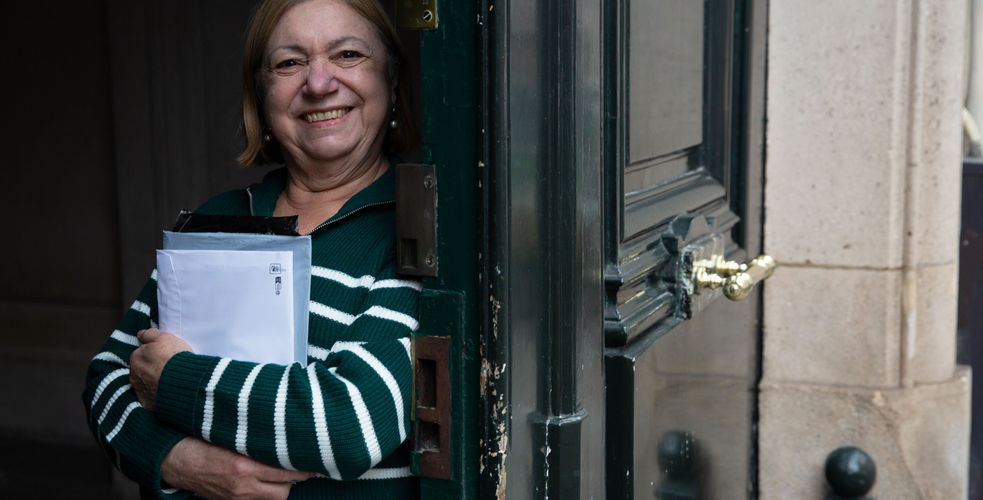
Come In, It's Open! Stories and secrets from Parisian building caretakers. Manuel and Marie-Thérèse Esteves arrived in the 1970s, fleeing Portugal and the Salazar dictatorship. On the street leading to Sciences-Po Paris, Manuel is a well-known figure and navigates police roadblocks with ease.
Having arrived in France over fifty years ago, the future Esteves couple built their life here, moving from the makeshift housing of Villeneuve-le-Roi to the more bourgeois neighbourhood on the Left Bank. One day, a caretaker's lodge became available — the kitchen assistant working at the seminary moved her family and daughter in. The Esteves family saga: when a crane operator marries a future caretaker, and both are hard workers, back in the 1980s.
Fleeing the Salazar dictatorship and poverty. The makeshift camps in Villeneuve-le-Roi
Like many Portuguese people who came to France in the 1960s, it was the Salazar dictatorship that drove the two future Esteves away from their homeland, along with the prospect of finding a better life.
"We arrived clandestinely, even though we had passports. You had to already have an address lined up, friends too, someone to welcome you, because we couldn't speak French. And then, on top of that, you had to find work, have an employer who would sort out your papers so you could work and earn a living. In the 1960s you arrived here and lived in makeshift barracks, in construction site housing. We could have gone to our former Portuguese colonies in Africa — Angola, Mozambique — but the Salazar dictatorship wouldn't let us go there, I don't know why. So instead, we went next door, to France, because France was a well-known country. It had just come out of the war, it was a bit on its knees, and it needed manpower to get back on its feet. I (Manuel Esteves) arrived in France in '66, I was 15. I quickly found work in construction. In Normandy, in Caen. Later I worked on major construction sites — I worked on the Olympia's new hall. And in Berlin, near the Wall. All in all, I worked 45 years in construction. I'm proud of it — construction is a remarkable trade, not given enough credit, even though you can work up to 70 hours a week. I've been retired since 2010."

Meeting Marie-Thérèse
"— It was in '72 that Marie-Thérèse and I met, at my older brother's wedding — he married her older sister. — He had a very beautiful car, I wanted to get in it — it was a Peugeot 404 Pininfarina coupé. A beautiful car matters."
The young couple had one child, a daughter, born in 1975.
"I arrived in France, in Villeneuve-le-Roi, at 16 with my parents, having just left school. To continue studying, I would have needed to travel into the city, but that was expensive. I quickly found work in Vitry-sur-Seine at a factory that made letter-sorting boxes. Before that, I'd worked in a laundry. Then I worked at the Saint-Sulpice Seminary on Rue du Regard as a part-time kitchen assistant. I was already taking care of building maintenance in Paris. We were still living in Villeneuve-le-Roi at the time. Meanwhile, we were often offered caretaker's lodges, but they were very small — 9 square metres. When we were offered the one where we now live, we said yes. Manuel fitted a mezzanine, making the whole place nearly 43 square metres, though the bathroom is still separate at the end of the entrance corridor."
On the walls, photographs capture years of work and family life — three grandchildren who live in the suburbs, in Morsang-sur-Orge.
"We go there every Sunday, have lunch and come back — not too late to avoid the traffic on the A6. The 404 coupé has been replaced by a petrol Opel Corsa, in which we pile in the shopping we do in the suburbs. In Paris, everything is very expensive."
Everything in the building has changed — except the kindness of the owners
In a now-distant era, each of the five floors was home to a single family, generally French, whose children were constantly popping by the lodge for one reason or another.
"Nowadays there are many foreigners who have bought pied-à-terre in Paris, where they often live year-round. Germans, Americans, Koreans, Mexicans, Colombians. The people here are lovely to us. I adore them all. I've never had a problem with any of them. And we're in a very, very secure neighbourhood — even if things get lively sometimes! At certain moments we can't even take out the bins." Because this is Rue Saint-Guillaume, not far from Boulevard Saint-Germain.
The street leading to Sciences-Po is very lively!
"Ministers come, conference speakers, demonstrations for Gaza — sometimes I even have to show my ID to get back home and pass through the police cordons."
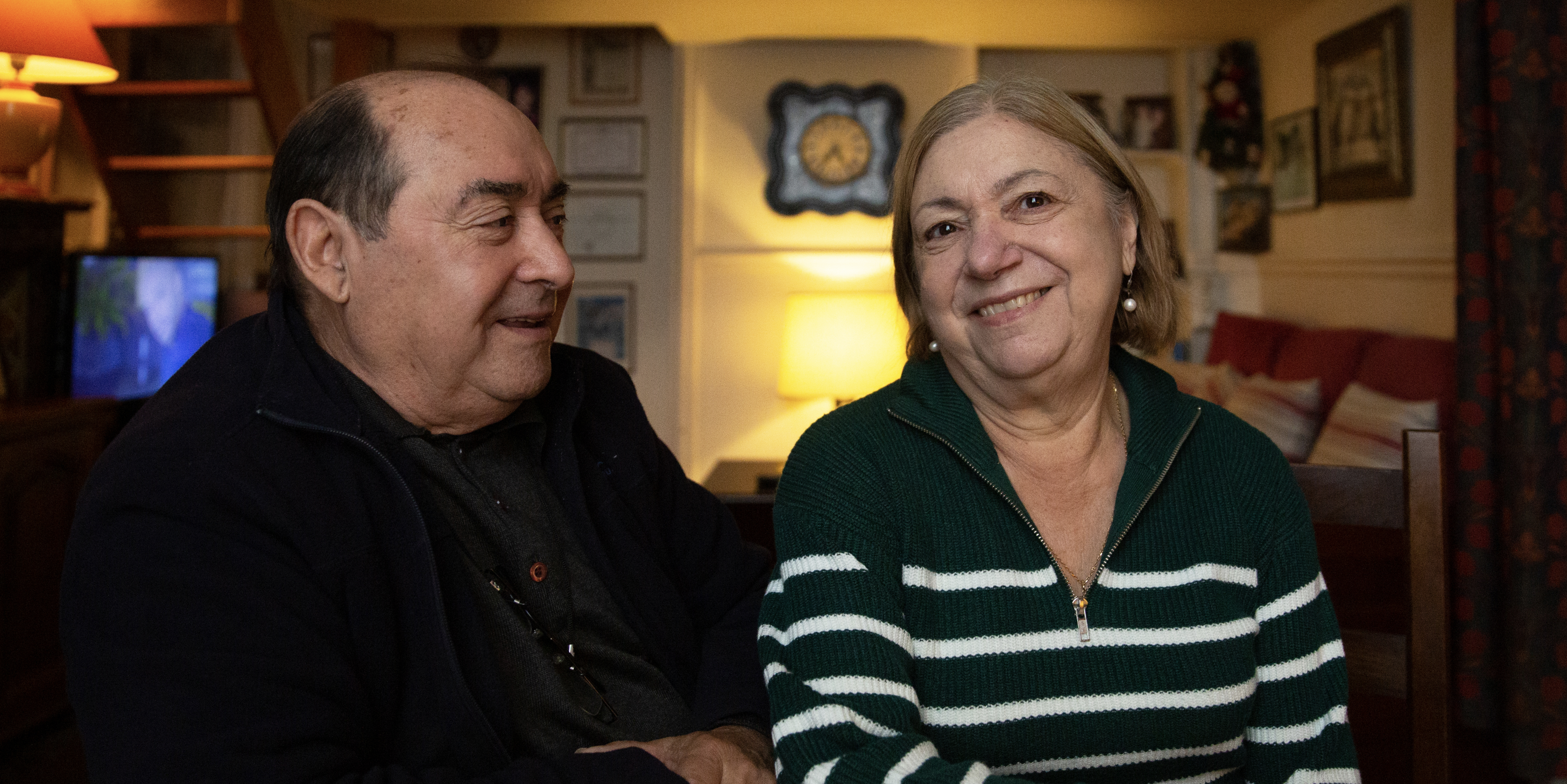
Carer, handyman, last stop for parcels
Aside from Amazon parcels and mail-order deliveries — which have become a daily fixture over recent years — Marie-Thérèse's busy life in the lodge runs from 7:30am to noon, and in the afternoons, around the same activities: cleaning the communal areas, minor odd jobs, handling the post, and responding to whatever the building's residents occasionally need, since a few elderly people still live in this part of Paris.
"We take in parcels for people all the time — I love being helpful. People tell me: 'Marie-Thérèse, I'm expecting a package, will you be there from such-and-such a time?' We're in the lodge when the delivery drivers arrive; they know there are caretakers here. We even take in parcels for other buildings sometimes. People want everything right away now, so we're seeing more and more local shops close because people order online."
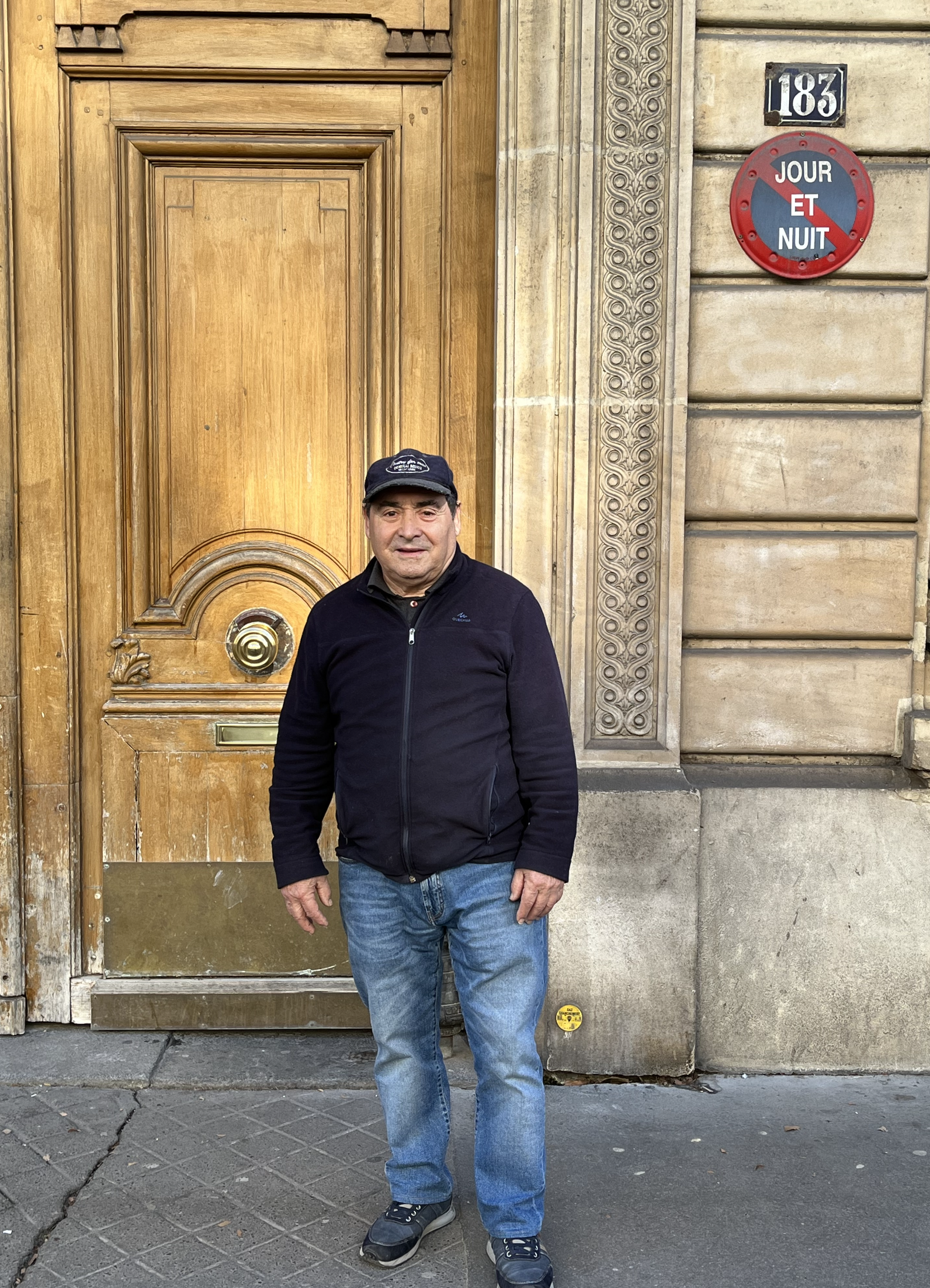
Manuel, anthropologist and sociologist
Still in great shape thanks to his daily walks of several kilometres, Manuel wanders the neighbourhood where he has watched both the commercial landscape and the personalities change.
"On Rue de Rennes, there are lots of closed shops. At Le Flore, I often saw famous people — Carlos, Paco Rabanne — and while walking I ran into Gainsbourg, Gérard Jugnot, Belmondo… More frequently, since their townhouse was nearby, Bernard Tapie and his wife with their dog. Vincent Lindon too. But at the National Assembly, it's quieter. This is the 7th arrondissement — as soon as you're in Saint-Germain-des-Prés, it's a completely different world. It's the Latin Quarter. I got to know the Latin Quarter because we have family around there — Marie-Thérèse's sister lives on Rue des Ciseaux. Her sister's mother-in-law was also a concierge, on Rue Dufour."
Where do building caretakers come from?
"When we arrived here in France, the caretakers in Paris were mostly Spanish. They were the ones running the chambre de bonne rooms on the sixth floors and the caretaker's lodges. Today, most of the Spanish have gone. Many went back home, many bought property. And then the Portuguese came along. Having a lodge is ideal — the woman has a small job, a home, and she can do additional cleaning work in the building."
Retirement is approaching. Marie-Thérèse would like to return to Portugal. But Manuel… "There are the grandchildren. I'll have a hard time leaving."
Good to know
When they retire, building caretakers lose their accommodation, which sometimes worries them. Recently, the president of the UDGE, the union for building caretakers and domestic employees, Slavika Nikolic, raised the alarm on the issue. 23,000 building caretakers are set to retire in the near future.
In social housing, where the caretaker role is equally crucial, there are now sworn caretakers who can issue fines for illegal dumping, noise disturbances, and illegal parking. There are currently only 650 of them in France, and they gain this status after being put forward by the social landlord, provided they volunteer.
Come In, It's Open is a series about building caretakers, running exclusively on En-Contact throughout 2026. Not on Netflix — but on our YouTube channel.
Watch the interview of Manuel and Marie-Thérèse in french.